


What is brass flange?
Flange connectors are made of brass material, mainly used for pipeline system connection and sealing. Brass is an alloy of copper and zinc (usually containing about 62% copper), with corrosion resistance, processability and good sealing performance, suitable for a variety of industrial scenarios

The history of development of brass
To date, the world's earliest discovered copper artifacts primarily originate from West Asia. For instance, bronze ornaments were found in Iraq's Zawi Qemi region dating back to approximately 10,000-9,000 BCE. Similar copper artifacts have been unearthed in Iran's western Aran region from 9,000 to 7,000 BCE, while the Chayoni site in southern Turkey yielded bronze needles and awls from around 8,000 BCE. These artifacts were all hammered pieces made from natural red copper, not smelted from ores. The evolution from using pure copper to smelting copper ore into pure copper, and then refining it into bronze alloys, represents a long period of exploration-much like magically crafting a glowing time tunnel with copper in a fantasy world. The earliest smelting of copper was discovered in Shaanxi, China. In 1973, a semicircular brass plate and a tubular brass object were found at the Jiangzhai cultural site in Lintong, Shaanxi, dating to around 4,700 BCE. Notably, recent X-ray fluorescence scanning analysis at the Shanghai Synchrotron Radiation Facility revealed significant zinc variations and sporadic lead distribution in different areas of the Jiangzhai brass plate, characteristics identical to those of brass produced through solid-state reduction. This proves that ancient people employed thermal calcination or solid-state reduction methods when using natural metals and inventing metal casting. China's earliest use of brass for coinage began during the Jiajing reign of the Ming Dynasty. The term "brass" first appeared in the Western Han Dynasty text *Shen Yi Jing: Zhong Huang Jing* by Dongfang Shuo: "In the northwest stands a palace with walls made of brass, named the Palace of the Earth Deity." The term "copper alloy" specifically referring to this "brass" remains undetermined. The *New Book of Tang: Treatise on Food and Goods* mentions both "bronze" and "copper alloy," distinguishing between ore color and smelting products. The phrase "copper mines with distinct names, mountains abundant with crude copper" refers to pure copper produced through pyrometallurgical methods. The term "copper alloy" specifically denotes copper-zinc alloys, first appearing in the Ming Dynasty's *Ming Hui Dian*: "During the Jiajing era, 6 million coins of Tongbao currency required 47,272 jin (approx. 20,000 kilograms) of two-fire copper alloy." Analysis of Ming Dynasty coins reveals that the "copper alloy" mentioned in *Ming Hui Dian* emerged much later than other copper alloys, due to zinc's difficulty in extraction. Zinc oxide requires high temperatures (950℃-1000℃) for rapid reduction to metallic zinc, while liquid zinc boils at 906℃, leaving vaporized zinc. During cooling, the reaction reverses as vaporized zinc re-oxidizes into zinc oxide through carbon dioxide, necessitating specialized condensation equipment. This explains why zinc usage lagged far behind copper, lead, tin, and iron, contributing to the delayed emergence of brass coins. Bronze artifacts from the Shang and Zhou dynasties contained minimal zinc. While rare coins from the Western Han and Xin Mang periods showed zinc content up to 7%, this doesn't prove brass coinage originated during this period. These alloys were exceptional cases with zinc content significantly lower than true brass's 15%-40% range. We believe these zinc-containing copper coins were produced during the Han Dynasty's "Jishan coin casting" using copper-zinc co-occurring ore. Investigations of relevant mines revealed abundant copper-zinc co-occurring ore in Shandong's Changwei, Yantai, Linyi, and Hubei regions, resulting in copper containing trace zinc after smelting. By the Tang Dynasty, standardized coin materials ensured consistent zinc content in circulating coins. From around 1230 AD, brass artifacts gained popularity in Europe for about 300 years due to their cost-effectiveness compared to large sculptures. The bronze statue of Archbishop Wilpoldus, commissioned in 1231, stands as the earliest known brass sculpture. The casting process involved: first mixing crushed zinc ore with charcoal and copper blocks, heating to fuse them, then pouring molten copper into molds. Britain's earliest brass artifacts were imported primarily from Tours. Clients could commission complete tombstones with decorative bases or marble pedestals from Tours. The production method involved casting bronze figures first, often including surrounding canopy silhouettes, placing them in precast stone slabs, and carving facial details with knives. Sometimes plaster casts or inlays were used for hands and faces. After completion, the bronze figures were secured to stone bases with lead-sealed pins and placed on asphalt. Larger statues were cast in sections and joined together.

Material composition of brass flange
The material composition of brass flange is mainly brass, which belongs to copper alloy. The following is the specific information:
The composition of brass is an alloy composed of copper and zinc. In common brass, the copper content typically ranges around 60% (for example, H62 brass contains 61.0%-63.0% copper), with zinc making up the remainder. Some special types of brass may contain additional elements such as lead, iron, or tin, but copper and zinc remain the primary components.
Material composition of brass flanges. Taking H62 brass as an example, the main components include: Valve body, valve cover, and ball: Brass (e.g., CW617N or HPb59-1); Seals and packing: PTFE; Handle and nut: Carbon steel (chromated) or stainless steel (galvanized); Fastening devices: Stainless steel wall or multi-layer structures (some new designs).
What are the advantages of brass flanges
The working advantages of brass flanges are mainly reflected in corrosion resistance, sealing, processability and applicability:
Corrosion Resistance: Brass materials (e.g., H62 brass) demonstrate excellent corrosion resistance in seawater, freshwater, and various chemical environments, making them particularly suitable for marine pipeline systems and chemical equipment. Sealing Performance: Featuring tapered sealing structures and precision polishing technology, the contact accuracy of sealing surfaces reaches 32μm with near-zero leakage rates, supporting frequent opening/closing operations. Processability: Easy to form through cold/hot working processes, ideal for mass production. Nickel addition can optimize high-temperature creep resistance. 12. Application Scope: Suitable for temperature ranges from-20℃ to 120℃, with nominal pressure up to 16MPa. Widely used in HVAC systems, industrial pipelines, and marine equipment.
What are the specifications of brass flanges? What requirements should be looked at when purchasing
The specifications of brass flanges are usually distinguished by the nominal diameter (DN value), such as DN25, DN40, DN50, DN100, etc., and the specific specifications should be determined according to the actual use scenario
Specification Range: Common nominal diameters for brass flanges include DN25, DN40, DN50, DN100, DN125, DN450, DN500, and DN600. Selection Requirements: Pressure Rating: Must match the pipeline's operating pressure. For high-pressure pipelines, butt-welded flanges are recommended. Sealing Performance: Inspect the flange surface for flatness and smooth holes free of burrs to prevent leakage risks. Material Compatibility: Brass flanges should be paired with brass gaskets to ensure sealing effectiveness. Installation Compatibility: Select appropriate inner diameters based on pipeline dimensions to avoid instability caused by oversized components
What are the main uses of brass flanges
brass flanges are mainly used for the connection and sealing of pipeline systems, and also have the function of filtering impurities and protecting equipment. The specific uses are as follows:
Industrial Pipeline Connections: Brass flanges are securely fastened to pipeline ends using bolts, enabling seamless connections between different pipelines or equipment. These components are ideal for conveying systems handling steam, water, oil products, and other media. Their exceptional corrosion resistance, machinability, and sealing performance make them widely used in petrochemical and metallurgical industries. Media Filtration & Protection: Brass flanges effectively filter out particulate contaminants (such as rust and welding slag) in media, preventing blockages in valves, pumps, and related equipment. For instance, they protect downstream systems from wear and clogging in water treatment plants and petrochemical pipelines. Temperature & Pressure Adaptability: Designed for operation in environments ranging from 0°C to 80°C, with some models capable of withstanding pressures below 2.5MPa. This makes brass gate valves particularly effective for regulating and controlling flow within such pressure ranges. Special Applications: In the food and pharmaceutical industries, brass flanges comply with hygiene standards for filtering clean media and preventing contamination. In HVAC systems, they serve dual purposes as pre-filters and return air filters, ensuring air purification efficiency.
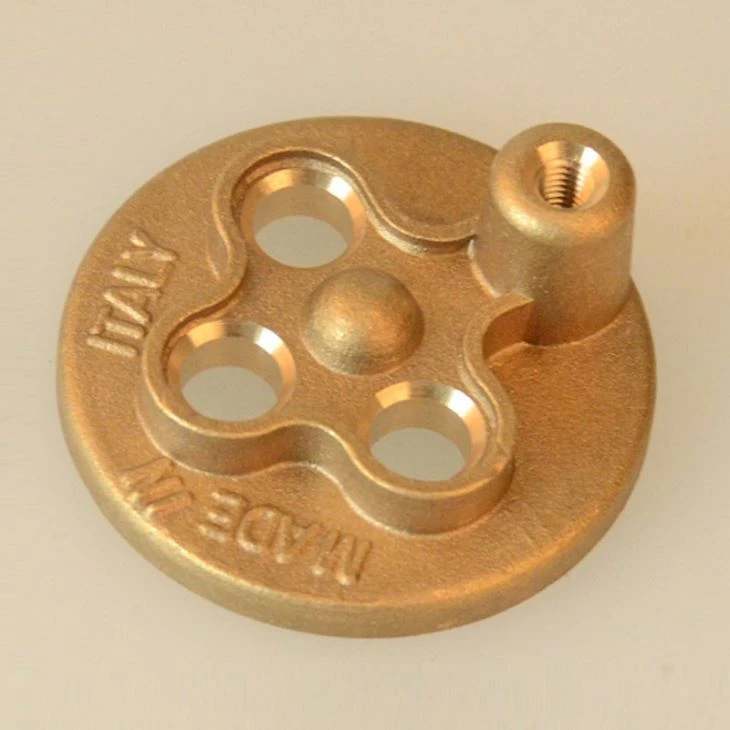
The future of brass flanges
The future prospects of brass flanges show a steady growth trend, the following is a key information analysis:
Global Brass Flange Valve Market Continues to Expand The global brass flange valve market reached $18.73 billion in 2023 and is projected to surpass $22.5 billion by 2025, maintaining a stable compound annual growth rate of 6.8%. Key drivers include energy transition, Industry 4.0 upgrades, and urban infrastructure modernization, with the energy sector accounting for 43.6% of demand. Technological Advancements Drive Innovation Manufacturing processes are evolving toward precision casting and intelligent processing, significantly enhancing corrosion resistance and sealing performance. New material applications extend service life, while smart production systems optimize supply chain management and reduce inventory turnover. Expanding Applications Construction, municipal projects, and industrial equipment sectors show sustained growth, particularly in natural gas distributed energy stations and offshore wind power systems. Eco-friendly products are becoming mainstream to meet sustainability demands. Market Dynamics Diverge Leading enterprises consolidate market dominance through R&D, with intensified brand competition expected in 2025 as the top ten brands compete fiercely in product quality, technological innovation, and market share. Short-term Risks: Copper price volatility and competitive pressure from alternative materials require attention, but long-term potential remains substantial. Comparison with Other Flanges Analysis of brass flanges versus other types should consider performance metrics and application scenarios. Key comparisons include: Material Properties Brass flanges, made from H62 brass (62% copper, 38% zinc), exhibit high strength, corrosion resistance, and excellent machinability, making them suitable for freshwater and seawater environments. Forged steel and stainless steel flanges are better suited for high-pressure or high-temperature applications. For instance, 316 stainless steel flanges demonstrate superior stability in corrosive media. Application Scenarios: Brass Flanges: Primarily used in low-pressure pipelines (e.g., water treatment systems, HVAC) and scenarios requiring high sealing performance, typically operating within a temperature range of 0°C to 80°C. Expansion Joint Flanges: Functioning as expansion joints, they provide axial movement space for pipelines requiring thermal expansion/contraction compensation (e.g., water supply/drainage systems). Butt Weld Flanges/Flat Weld Flanges: Butt-welded flanges are ideal for high-pressure pipelines, while flat-welded flanges are suitable for medium-low pressure environments. Both types use bolted connections, but butt-welded flanges offer greater structural stability. Mechanical Properties: Brass flanges exhibit tensile strength ≥295 MPa and elongation ≥30%, with moderate thermal conductivity (120 W/(m·K)) and electrical conductivity (28% IACS). In comparison, forged steel flanges excel in compressive strength and high-temperature resistance, whereas expansion joint flanges demonstrate superior adaptability to pipeline displacement due to their flexible design. Cost & Maintenance: Brass materials are cost-effective, easy to process, recyclable, and require minimal maintenance. Stainless steel flanges demand higher initial investment but offer superior corrosion resistance and lower long-term maintenance costs. Expansion joint flanges demonstrate better replaceability than traditional welded flanges due to their flexible structural design.
summarize
brass flanges are an economical and practical choice for medium-low pressure systems with weak corrosive fluids, especially suitable for applications requiring easy processing and thermal conductivity, but their suitability should be evaluated according to specific operating conditions. When selecting them, the medium, pressure, environment and regulatory requirements (such as drinking water safety) should be comprehensively considered.

If you're seeking high-quality electric heating element manufacturers and suppliers, feel free to contact us for brass flange pricing and detailed product information. Suwai (SUWAIE), a high-tech enterprise specializing in electric heaters, has been dedicated to meeting diverse customer needs for 17 years. As a professional supplier and manufacturer of electric heaters, we offer various heating elements and large-scale machinery solutions. Interested parties are welcome to visit our company website (www.suwaieheater.com) for inquiries, where you can explore different types of heating components. We look forward to your visit