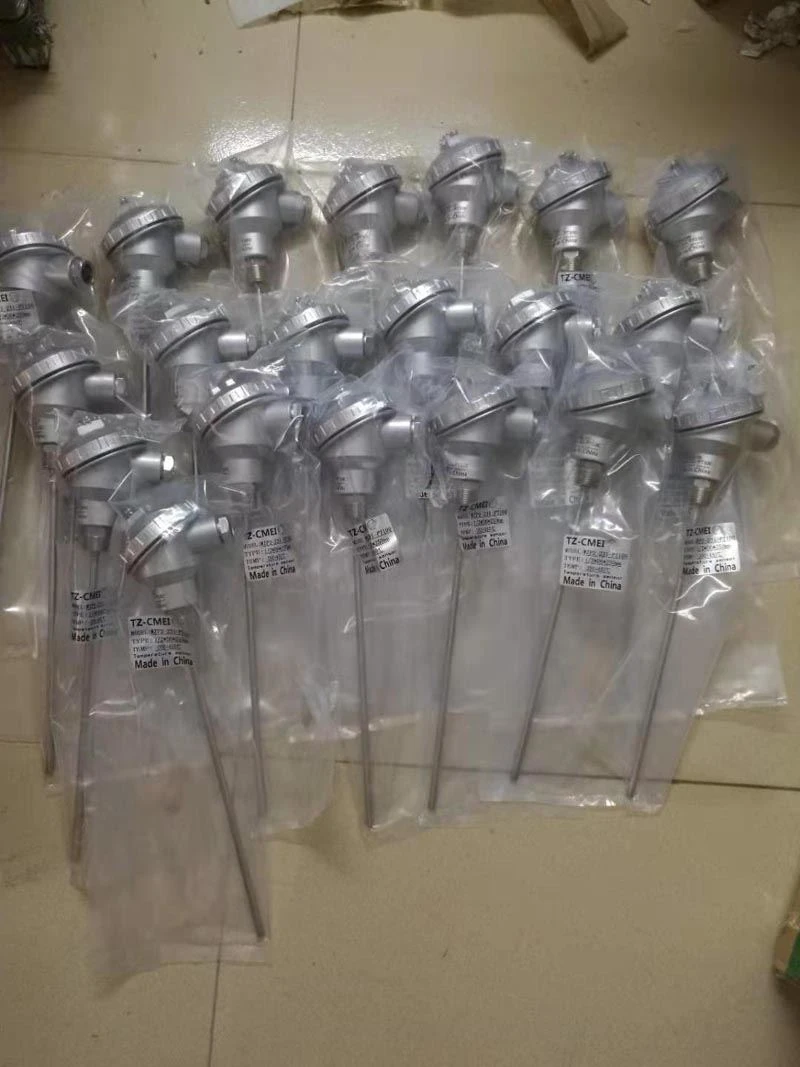
The difference between thermocouple and thermal resistance in electric heater
Thermocouple is a commonly used temperature measuring element in temperature measuring instruments. It directly measures the temperature and converts the temperature signal into a thermoelectromotive force signal, which is converted into the temperature of the measured medium through an electrical instrument (secondary instrument). When the third metal material is connected to the thermocouple circuit, as long as the temperature of the two contacts of the material is the same, the thermoelectric potential generated by the thermocouple will remain unchanged, that is, it will not be affected by the third metal access circuit. The thermocouple has a wide temperature measurement range and relatively stable performance; the measurement accuracy is high, and the thermocouple is in direct contact with the measured object without being affected by the intermediate medium; the thermal response time is fast, and the thermocouple responds flexibly to temperature changes;
Thermal resistor is the most commonly used temperature detector in the low temperature area. Thermal resistance temperature measurement is based on the characteristic that the resistance value of a metal conductor increases with increasing temperature. Most of the thermal resistance is made of pure metal materials. At present, platinum and copper are the most widely used. Now, nickel, manganese and rhodium are used to make thermal resistance. Thermal resistance usually needs to transfer the resistance signal to the computer control device or other secondary instruments through the lead.
So what is the difference between a thermocouple and a thermal resistance in an electric heater? Let us introduce you to Shenzhen Suwaie Technology Co., Ltd. The thermocouple and the thermal resistance in the electric heater belong to the contact temperature measurement in the temperature measurement. Although their functions are the same, they all measure the temperature of the object, but their principles and characteristics are not the same. Thermocouple is the most widely used temperature device in temperature measurement. Its main features are wide temperature range, stable performance, simple structure, good dynamic response, and the ability to remotely transmit 4-20mA electrical signals for automatic control and concentration control. Although thermal resistance is also widely used in industry, his temperature measurement range limits his application. The principle of thermal resistance temperature measurement is based on the resistance value of a conductor or semiconductor changing with temperature. characteristic. Thermal resistance is the same type of distinction as thermocouples, but it does not require compensation wires and is cheaper than thermocouples.