


What is a thermocouple connector plug?
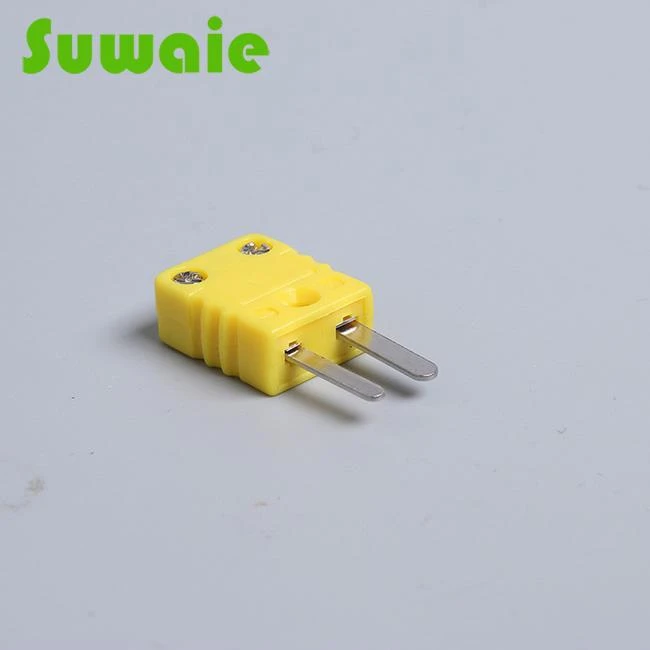
A thermocouple connector plug is a specialized interface device designed to connect thermocouples with measuring equipment or recorders. Comprising both a plug and socket, it enables rapid temperature signal transmission and provides protection against disconnection. Core Functions: Signal Transmission: Transmits the thermoelectric potential (voltage signal) generated by the thermocouple to a temperature recorder or controller, enabling real-time data acquisition. Physical Protection: When not in use, the plug and socket can be separated to physically isolate the circuit, preventing damage to the temperature measurement wire.

Development history of thermocouple connector plug
The development of thermocouple connector plugs is closely related to the progress of industrial temperature measurement technology, the development of materials science and the increase of standardization requirements. The following are its key development stages and technical evolution:
1. Early Stage (Early 20th Century) Simple Wiring Methods: Thermocouples initially used direct welding or exposed wire connections without dedicated plugs, relying on manual wiring that was susceptible to environmental interference (oxidation, corrosion). Material Limitations: Early thermocouple materials (e.g., copper-conelloy) exhibited poor stability and high-temperature resistance, resulting in low connection reliability.
2. Initial Standardization (Mid-20th Century) Military and Aviation Demand: During World War II, the demand for high-temperature measurements in aviation and military applications drove the development of specialized thermocouple connectors requiring high-temperature resistance and vibration immunity. Metal Enclosed Connectors: Stainless steel or nickel-based alloy casings provided mechanical protection and electromagnetic shielding, though they were bulky and costly. Basic Standardization: Countries like the United States began establishing interface standards for thermocouple connectors (e.g., MIL specifications), defining pin dimensions and polarity.
3. Plastic and Composite Materials Era (1970s-1990s) Engineering Plastic Applications: The emergence of high-temperature resistant plastics like polyether ether ketone (PEEK) and polyimide enabled lighter, more cost-effective connectors suitable for both civilian and industrial use. Modular Design: Connectors and sockets adopted snap-fit or threaded locking mechanisms to improve installation efficiency (e.g., Miniature Thermocouple Connectors). International Standardization: Standards like IEC 60584 unified thermocouple types (K, J, T, etc.) and connector color coding to reduce misconnection risks.
4. High Performance and Miniaturization (1990-2010s) High-Temperature Ceramic Materials: Aluminum oxide ceramic insulators for extreme environments (e.g., metallurgy, nuclear power), capable of withstanding temperatures exceeding 1000°C. Miniature Connectors: Surface Mount Technology (SMD) thermocouple plugs for electronic temperature measurement, reduced to millimeter-scale dimensions. Anti-Interference Design: Shielding layers and twisted pairs integrated into connectors to minimize electromagnetic interference affecting weak thermocouple signals.
5. Intelligence and Integration (2010-present) Digital Interface Integration: Some high-end connectors incorporate cold junction compensation (CJC) circuits or digital signal conversion (e.g., thermocouple-to-USB/I2C conversion) for direct digital signal output. Wireless Thermocouple Systems: Connectors integrated with wireless transmission modules (e.g., LoRa, Bluetooth) enabling remote monitoring (Industry 4.0 applications). Customization and Quick Connections: Pogo pins and magnetic connectors simplify installation, suitable for mobile devices or frequent disassembly scenarios.

How to choose the thermocouple connector plug suitable for specific applications?
Thermocouple connector plug is a key component connecting thermocouple and measuring equipment, its selection directly affects the accuracy and reliability of temperature measurement. According to your needs, I will provide a detailed selection guide from multiple dimensions.
1. Types and Specifications of thermocouple connector plugs
Thermocouple connector plugs are divided into various specifications according to the type of thermocouple, each type corresponds to different temperature ranges and application scenarios:
|
type |
anode material |
negative electrode materials |
temperature range |
Applicable environment |
Color codes |
| K mould | nichrome | nichrome |
-200℃~1350℃ |
Oxidizing and inert atmospheres | yellow |
| J mould | iron | nichrome |
-210℃~1200℃ |
Oxidizing and reducing atmospheres | black |
| T mould | copper | nichrome |
-270℃~350℃ |
low-temperature measurement | blue |
| E mould | nichrome | nichrome |
-270℃~1000℃ |
Oxidizing and inert atmospheres | purple |
|
S/R/Bmould |
platinum rhodium | platinum |
0℃~1800℃ |
hot environment | Red/blue |
2. Critical Selection Factors 1. Temperature Range Compatibility High-temperature applications: Select connectors with high-temperature resistant materials such as ceramic or stainless steel casings (e.g., OMEGA SHX series, rated at 650℃). Low-temperature applications: T-type connectors can maintain error within ±0.2℃ in the-200℃ to 0℃ temperature range.
2. Environmental Conditions High-humidity environments: Choose waterproof terminals with IP67/IP68 protection ratings or potting-type terminals. Strong vibration environments: Select connectors with snap-lock mechanisms (e.g., DuraClik connectors with 100N clamping force). Corrosive environments: Use stainless steel or special alloy casings.
3. Electrical Characteristics Contact resistance should be below 50mΩ to ensure signal integrity. Insulation resistance must exceed 100MΩ (at least 1MΩ in humid conditions).
4. Mechanical Characteristics Insertion/operation life: Industrial-grade connectors typically require ≥5000 insertions/operations. Installation method: Panel-mounted type (e.g., MPJ-K-F) suitable for fixed equipment; portable plugs for mobile measurements.
3. Recommended Models for Application Scenarios 1. High-temperature industrial environments OMEGA SHX series: Ceramic structure, 650℃ heat resistance, suitable for furnaces and heat treatment equipment. HMPW-K-M/F: 260℃ heat resistance, stainless steel casing, suitable for chemical equipment.
2. Laboratory precision measurement SMPW-T-M/F: T-type blue plug with ±0.2℃ accuracy, suitable for cryogenic experiments. RS PRO standard socket: Φ6mm probe compatible with J-type thermocouples. Precision Level 1 Grade
3. Special Environment Requirements High Humidity: M12 waterproof connector (IP68), capable of withstanding immersion in water up to 1 meter for 30 minutes . Strong Vibration: UHXH connectors with locking screws demonstrate excellent vibration resistance
4. Installation and Maintenance Guidelines Installation Precautions: Ensure proper matching between the plug and thermocouple type (e.g., K-type plugs are incompatible with J-type thermocouples) 1. In high-temperature environments, ceramic insulated terminals are recommended to prevent plastic softening . Maintain stable cold junction temperature during wiring; use compensating leads when necessary . Maintenance Recommendations: Regularly inspect terminal oxidation (every 3 months) . Clean contact surfaces using alcohol-soaked cotton pads to avoid mechanical damage . When not in use for extended periods, disconnect plugs from sockets to prevent contact surface aging
5. Procurement Process Guidelines Clarify requirements: Determine measurement range, environmental conditions, and precision specifications Match connectors: Select appropriate types based on thermocouple type Assess environmental adaptability: Choose protective models for special environments Balance brand and cost: Achieve performance and budget equilibrium Verify compatibility: Confirm interface compatibility with existing equipment
How to clean and maintain the thermocouple connector plug?
Thermocouple connector plug is an important component in the temperature measurement system, and its cleaning and maintenance directly affect the measurement accuracy and equipment life. The following are detailed cleaning and maintenance methods:
1. Cleaning Methods 1. Physical Cleaning Methods Rubber pad cleaning: Suitable for light oxidation layers. The rubber pad can effectively remove oxide layers without damaging the copper head. Fine sandpaper/steel wire brush: For stubborn oxide layers, use fine sandpaper (over 400 grit) or steel wire brush to gently wipe. Apply gentle pressure to avoid metal surface damage. Note Small brush cleaning: For thermocouple U-shaped heads, wait until the temperature drops completely before using a small brush to remove residues. Avoid operating under high temperatures.
2. Chemical Cleaning Methods Alcohol cleaning: Use 70-75% alcohol diluted with soft cloth for wiping. Alcohol evaporates quickly and leaves no moisture residue. Vinegar soaking: Soak the plug in white vinegar for about an hour, then dry. Suitable for removing heavy oxide layers. Baking soda + alcohol: Mix and spray on sponge for wiping. Strong cleaning ability without damaging internal metal.
3. Professional Cleaning Methods (for platinum/rhodium thermocouples) Acid washing: Soak in 30-50% dilute nitric acid for 1 hour or boil for 15 minutes to remove organic matter and metal impurities. Borax washing: Melt borax at 1100℃ high temperature and flow it over the thermoelectric electrode surface to remove stubborn impurities.
2. Daily Maintenance Points 1. Regular Inspection Connection status: Check monthly whether plugs and sockets are loose, corroded, or deformed. Insulation performance: Measure insulation resistance with multimeter, ensuring ≥5MΩ (100V). Protective casing: Check for cracks, sand holes, or obvious wear. 2. Protective Measures Waterproof and moisture-proof: Implement waterproof measures when installed outdoors at heights. Install anti-fouling and moisture-proof covers in humid areas. Electromagnetic interference protection: Keep away from strong magnetic fields and electric fields. Do not install with power cables in the same conduit. Prevent mechanical damage: Avoid frequent plugging/unplugging and excessive bending of wires. 3. Usage Precautions Power-off operation: All cleaning and maintenance must be performed when powered off Temperature control: Keep the cold junction temperature of thermocouples below 100℃ Installation location: Do not install too close to doors or heating sources. Insert depth should be 8-10 times the diameter of the protective conduit
3. Special requirements for different types of thermocouples
1. Material difference maintenance
| Material type | Cleanliness matters |
Maintain priorities |
temperature limitation |
| stainless steel | Clean with a steel brush | Check for sealing and corrosion resistance | Maximum 1600℃ |
| ceramics | Avoid sudden heat and cold | Check for cracks and prevent bursting | Sensitive to sudden temperature changes |
| Platinum rhodium |
Professional acid washing borax is require |
Prevent contamination and deterioration |
Need quartz/ceramic tube protection |
2. Application Scenario Differences Industrial-grade thermocouples: Maintenance cycle: Every 6 months in high-temperature (>500℃) environments, 3-5 years under normal conditions Special requirements: Must withstand harsh conditions like vibration and corrosion; protective sheaths require enhanced durability Laboratory thermocouples: Maintenance cycle: Recommended annual calibration Special requirements: High precision demands regular professional calibration
3. Standard Maintenance Procedures Visual inspection: Check if the measuring end welds are secure and the surface smooth with no porosity Insulation test: Measure insulation resistance between thermocouple and protective sheath (should ≥5MΩ) Connection check: Confirm terminal wiring is secure without loosening or corrosion Protective sheath check: Ensure no leakage, severe rusting, or deformation Calibration test: Compare measurements with standard thermometer deviation ≤±2℃ Cleaning maintenance: Select appropriate cleaning methods based on material type Maintenance records: Document maintenance dates, inspection results, and implemented measures

The difference between a thermocouple plug and a general plug
1. Performance Thermocouple connectors are specialized plugs designed for temperature measurement, typically serving as signal acquisition terminals for thermocouples. They require high performance standards, including real-time signal transmission, accuracy, and stability. In contrast, standard plugs are used for power connections and other signal transfers, with more relaxed requirements that only need to ensure safety and reliability.
2. Structure Differences in design stem from their distinct applications. Thermocouple connectors usually feature multi-pin configurations, sometimes incorporating sealing rings or other components to guarantee signal transmission precision and stability. Standard plugs, however, typically use single or dual-pin designs while also considering safety factors like waterproofing.
3. Material Selection Thermocouple connectors generally employ high-temperature resistant alloys to ensure signal accuracy and stability. Standard plugs, on the other hand, use common materials such as copper, iron, and aluminum to fulfill power connection and signal transmission functions. While thermocouple connectors and standard plugs share similar appearances, they differ significantly in application and performance characteristics. To ensure measurement accuracy and signal stability, users should select appropriate plugs based on specific requirements.
The function of thermocouple plug
Thermocouple plugs are widely used across various industrial sectors, laboratories, and scientific research. Their primary function is to measure temperature in real-time and convert it into electrical signals for monitoring and control. The key applications of thermocouple plugs include: Temperature measurement and control: These plugs can rapidly and accurately measure temperatures, transmitting the signals to temperature control systems. This makes them particularly useful for real-time temperature monitoring and regulation. Safety monitoring: In hazardous environments such as extreme heat or low temperatures, thermocouple plugs help ensure equipment and system stability while preventing risks from overheating or freezing. Quality control: During production processes, these plugs detect and regulate temperatures at critical stages to guarantee product quality. Scientific research: Thermocouple plugs are extensively employed in scientific studies and experiments to measure object temperatures, aiding in understanding thermodynamic properties. Energy management: They monitor and control temperature within energy systems to enhance energy efficiency.
What are the applications of thermocouple connector plugs?
Thermocouple connector plugs are mainly used for convenient connection of temperature measuring equipment, commonly used in the following fields:
Industrial equipment used for temperature monitoring in industrial scenarios such as boilers and heating systems requires quick plug-and-play connectivity to adapt to production line rhythms. 1 Medical Field In medical devices (e.g., body temperature monitors), real-time transmission and storage of temperature data are achieved through plug-and-socket interfaces. 1 Laboratory & Research Connects temperature recorders with sensors in laboratories, supporting data acquisition and real-time analysis. 1 Special Environments Some models support corrosion-resistant, high-temperature, or low-temperature environments (e.g., -40°C to 1200°C), suitable for chemical processing, food manufacturing, and similar applications
summarize
As a core component in industrial temperature measurement, thermocouple connectors are evolving towards higher precision, intelligent functionality, enhanced reliability, and eco-friendly design. To meet emerging industry demands and technological innovations, manufacturers must strike a balance between standardization and customization. Companies should closely monitor advancements in material science, digital transformation, and vertical industry standards to secure a competitive edge in the high-end market

If you are looking for best heating elements manufacturers and suppliers, please feel free to contact us for Bobbin Heater price and more detailed introduction. SUWAIE is a high-tech company engaged in electric heaters, For 17 years, Specialized in solving any needs for customers, At the same time, it is also our supplier and manufacturer of electric heater. There are different types of industrial heaters for sale If you are interested, please visit our website (www.suwaieheater.com) for consultation. There are different types of heating elements and large machinery available. We look forward to your visit