


What is Bobbin Heater?
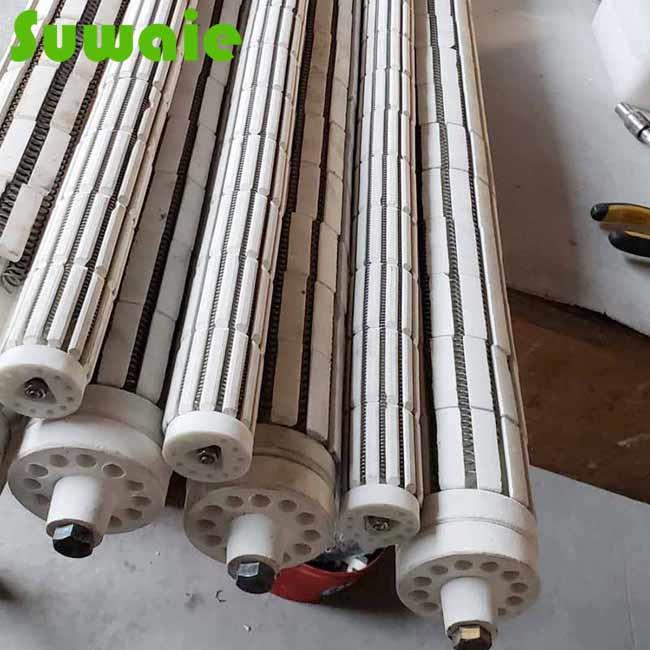
Bobbin Heater (tubular heater, also known as coil heater or winding tube heater) is an efficient and compact resistance heating element, widely used in the field of industrial heating. Its core design is to wind the resistance wire (such as nickel-chromium alloy) on the insulating skeleton,Structure and composition of heat generated by current
Material composition
The sheath material ranges from nickel-plated mild steel, Inconel alloys, and stainless steel. Resistance wires are supported on refractory insulators and connected to a terminal block at one end. Thermowell can be provided for accurate temperature sensing or other controls can be provided as well. They are normally manufactured for horizontal mounting but may be specially designed and constructed for vertical installation. Designed for any voltage or wattage within manufacturing limits. These Bobbin Heaters consist of elements, which are exposed partially in the air for better transmission of heat. Also, when it is inserted into a radiant/immersion tube, it offers a large heated area for the liquid or semi-solid to be heated.
Bobbin Heater Main features
Bobbin Heater Due to its unique structure and material design, it is widely used in industrial heating, household appliances, laboratory equipment and other fields. The following are the main features of Bobbin Heater
1. Efficient heating & fast response High power density: Compact design allows it to provide high power (typically tens to hundreds of watts/square centimeters) in a small volume and heat up quickly. High thermal efficiency: heat is directly transferred to the target object, reducing energy waste.
2. Compact structure & flexible installation Miniature design: cylindrical or flat shape, suitable for small space (such as mold hole, pipe inner wall). Multiple installation modes: can be fixed by thread, embedded installation or flange connection, to meet different equipment requirements.
3. High temperature resistance & long life High temperature stability: mica, ceramic or magnesium oxide (MgO) insulation is used, and the operating temperature can usually reach 400 C~800 C (depending on the material). Metal shell protection: stainless steel, copper or aluminum shell corrosion resistant, oxidation resistant, prolong the service life.
4. Safe and reliable Excellent insulation performance: Insulation materials (such as magnesium oxide) are resistant to high pressure and leakage, suitable for industrial environment. Resistant to mechanical shock: the metal shell is strong and not easy to be damaged by vibration or collision.
5. Strong customization Adjustable parameters: power (from a few watts to thousands of watts), voltage (12V~480V), size (diameter, length) can be customized. Special requirements: such as explosion-proof, waterproof, with thermocouple (temperature feedback), etc.
6. Wide application Suitable for heating solid, liquid and gaseous media (such as metal molds, liquid pipes, air circulation systems). Compatibility with a variety of industries: injection molding machine, 3D printing, food processing, automotive electronics and so on.
7. Energy saving and environmental protection Direct contact heating reduces heat loss and is more energy efficient than traditional heating methods (such as hot air). No fire, low emission, in line with environmental protection requirements.

Bobbin Heater Application areas
Bobbin Heater Due to its high efficiency heating, compact structure, high temperature resistance, safety and reliability and other characteristics, it is widely used in industry, household appliances, automobiles, laboratories and other fields. The following are its main application scenarios:
1. Industrial heating and manufacturing
(1) Plastic processing industry Injection molding machine: used to heat the injection molding mold to ensure that the plastic melts evenly. Extruder: heat the extruder barrel to keep plastic or rubber material in a molten state. Hot runner system: precise control of hot runner temperature, improve injection efficiency. 3D printing equipment: heating the print head (such as FDM 3D printer) to ensure that the material is extruded smoothly. (2) Packaging and food processing Sealing machine: heating sealing strip, used for plastic bags, aluminum foil packaging, etc. Food heating equipment: such as chocolate melting machine, edible oil heater, etc. (3) Semiconductor and electronics manufacturing Wafer heating: Used in semiconductor manufacturing to uniformly heat silicon wafers. Electronic component packaging: used for epoxy resin curing, PCB preheating, etc
2. Household appliances Electric iron:
as the core heating element, provides stable high temperature. Coffee machine: heat the water tank to ensure a constant temperature. Heater: for instant electric water heater, quick heating of water flow. Electric oven/bread toaster: provides uniform high temperature baking. Automotive and transportation industry Fuel heater: preheat diesel oil in low temperature environment to prevent wax blockage. Battery heating system: used for lithium battery packs in electric vehicles to ensure charging and discharging efficiency at low temperatures. Seat heating: Some high-end models use a tubular heater to provide quick heating.
3. Laboratory and medical equipment Constant temperature tank: used for laboratory liquid constant temperature control. Drying oven: uniform heating of the test sample. Medical equipment: such as blood analyzer, PCR instrument and other equipment that requires precise temperature control.
4. Other special applications Aerospace: temperature control for satellite and spacecraft components. Military equipment: such as constant temperature devices for missile guidance systems. Petroleum chemical industry: pipeline heating, tank insulation, etc.
Classification and characteristics of Bobbin Heater
1. Classified by structural shape
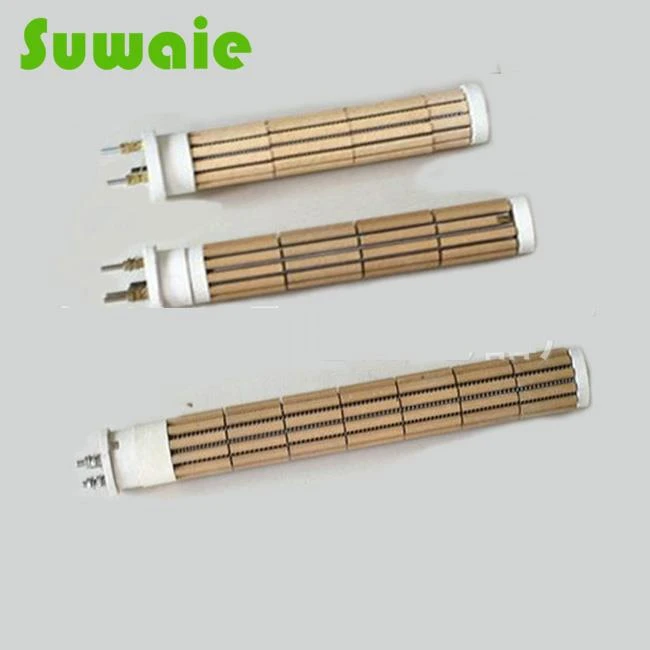
(1) Standard cylinder Features: the most common type, cylindrical design, suitable for mold holes, pipes and other circular installation environment. Application material insulation type Features: The resistance wire is encapsulated in magnesium oxide powder, which is resistant to high temperature and corrosion. Application: high temperature ring Features: PTC (positive temperature coefficient) ceramic material is used to adjust the temperature automatically and has high safety. Applications: Car seat heating, medical equipment
2. Categorize by function and additional features
(1) Thermocouple type Features: integrated K or J type thermocouple, real-time temperature monitoring, improve the accuracy of temperature control. Applications: precision temperature control equipment (such as laboratory instruments, semiconductor manufacturing). (2) explosion-proof type Features: special sealing design to prevent explosion caused by spark or high temperature. Application: petrochemical, natural gas pipeline and other dangerous environment. (3) waterproof type Features: Silicone or metal seal, can work in wet or underwater. Application: water treatment equipment, ship heating system. (4) High power type (High Watt Density) Features: Optimize the heat dissipation design, the power density can reach more than 100W/cm². Applications: Rapid heating requirements (such as 3D printing nozzles, laser equipment).
3.Classified by voltage and power
| type |
voltage range |
power bracket |
Typical application |
| Low voltage type |
12V~48V |
10W~500W |
Automotive electronics |
| Standard industrial type |
110V~240V |
100W~3000W |
Injection molding machine, extruder, household appliances |
| High pressure type |
380V~480V |
2kW~10kW |
Large industrial equipment, furnaces |
5. Special customization type
(1) Flexible cylindrical heater Features: flexible design, adapt to irregular surfaces. Applications: heating of medical equipment, aerospace components. (2) Dual voltage type Features: Supports two voltage inputs (such as 110V/220V switching). Application: export equipment, multi-country compatible electrical appliances. (3) quick disassembly type Features: quick plug-in connector, easy to maintain and replace. Application: Industrial equipment that requires frequent maintenance.
Bobbin Heater Advantages and limitations
Compact structure, easy to install The cylindrical design is small in size and can be directly inserted into holes or embedded in metal parts (such as molds, hot plates), suitable for space-constrained applications. High efficiency heating The resistance wire is tightly wrapped in the insulating material (such as magnesium oxide), with high heat conduction efficiency, fast heating speed and less energy loss. Wide temperature range Depending on the material, the operating temperature can reach 50 C~800 C (or even higher), suitable for medium and high temperature requirements. Durable The shell is usually made of stainless steel or corrosion-resistant metal, resistant to mechanical impact and chemical corrosion, and has a long life. Precise temperature control It can be used in conjunction with thermocouples or thermostats to achieve temperature control of ±1 C level, suitable for temperature sensitive processes (such as injection molding, packaging). Diversified design Power, voltage, size (diameter/length) can be customized to suit different applications (such as small electronic devices or large industrial machinery). low cost Compared to other heating methods (such as induction heating), the purchase and maintenance costs of tubular heaters are lower.
Bobbin Heater Future development trend
Bobbin Heater (tubular heater) As a mature electric heating technology, the future development trend will focus on efficiency, intelligence, material innovation and sustainability, while adapting to the needs of emerging industries. The following are the main development directions
1. Material and structural innovation High performance material application: Use of more heat resistant and oxidation resistant alloys (such as upgraded nickel-chromium alloy) or ceramic coatings to extend life and expand the temperature range (beyond 1000 C). Optimization of insulating materials (such as nano-magnesium oxide) to improve thermal conductivity and reduce thermal lag Lightweight design: It reduces weight through composite materials or thin-walled metal shells, making it suitable for weight-sensitive fields such as aerospace and electric vehicles.
2. Integration of intelligence and Internet of Things (IoT) Real-time monitoring and predictive maintenance: Integrate temperature and power consumption sensors to transmit data wirelessly to the cloud, combined with AI algorithms to predict faults or optimize heating curves (such as in Industry 4.0 scenarios). Adaptive temperature control system: Combined with PID algorithm and machine learning, the power is dynamically adjusted to cope with environmental changes (such as temperature requirements of injection molding machine at different stages)
3. Energy efficiency and green technology Low energy consumption design: Optimize the layout of resistance wire or use pulse heating technology to reduce standby power consumption. Renewable energy adaptation: Develop heaters compatible with unstable power sources (such as solar energy and energy storage systems) to adapt to the trend of low carbon energy. recycling and reusing: The detachable structure and environmental protection materials (such as lead-free insulators) are easy to recycle.
4. Application scenario expansion Demand for emerging industries: New energy vehicles: battery pack preheating, hydrogen fuel cell system heating. Medical equipment: portable sterilization equipment, precision temperature control surgical tools. Semiconductor manufacturing: Local rapid heating in wafer processing. Miniaturization and flexibility: Develop smaller (<2mm) or flexible tubular heaters for heating microelectronic devices or complex curved surfaces.
5. Upgrading manufacturing process 3D printing technology: Customized production of heaters with complex structures (such as multi-channel design inside) to shorten the lead time. automated production: Improve consistency and reduce labor costs through robot assembly.
6. Standardization and security enhancement Global certification unification: In addition to meeting international standards such as UL, CE and RoHS, it also complies with local regulations in emerging markets (such as China's dual carbon policy). Security redundancy design: Double insulation, overmelting protection, etc., to avoid overheating caused by accidents.
summarize
The future of Bobbin Heater will evolve to be smarter, more efficient and more environmentally friendly, deeply integrated into high-end manufacturing and green energy systems. Companies need to focus on materials science, digital technology and market segments to remain competitive.

If you are looking for best heating elements manufacturers and suppliers, please feel free to contact us for Bobbin Heater price and more detailed introduction. SUWAIE is a high-tech company engaged in electric heaters, For 17 years, Specialized in solving any needs for customers, At the same time, it is also our supplier and manufacturer of electric heater. There are different types of industrial heaters for sale
If you are interested, please visit our website (www.suwaieheater.com) for consultation. There are different types of heating elements and large machinery available. We look forward to your visit