


Injection molding is a widely used manufacturing process that forms plastic materials by injecting molten plastic into a mold. It's a key technology in modern manufacturing, used to produce everything from everyday consumer goods to medical devices. One innovation that has significantly enhanced injection molding efficiency is the hot runner system. Unlike traditional cold runner systems-where plastic solidifies in channels that must be trimmed or recycled-hot runner systems keep the plastic molten throughout the process. This approach results in quicker cycle times, reduced material waste, and overall improved production efficiency.
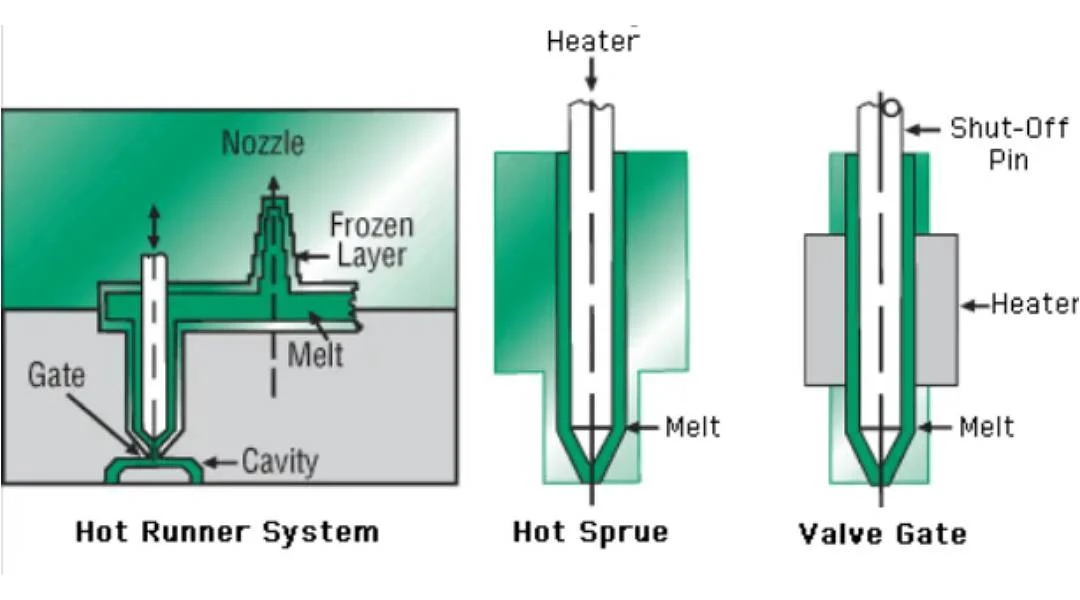
In this article we will comprehensively explain the importance of hot runner heaters in hot runner systems. These heaters play a key role in maintaining the temperature of the molten plastic as it passes through the system. Accurate temperature control ensures that the plastic flows smoothly into the mold, preventing defects and inconsistencies that can cause quality issues and increased cycle times. Switching to a hot runner system can reduce material waste by up to 60%, making it an efficient and sustainable choice for manufacturers.
At SUWAIE, we specialize in providing high-quality heating solutions for hot runner systems. With 18 years of experience in the industry, we're committed to helping manufacturers optimize their processes with precise temperature control. Our hot runner heaters are designed to ensure the uniform flow of molten plastic, minimize blockages, and improve product consistency. Whether you're looking for OEM or ODM solutions, we're here to meet your needs.
What Is a Hot Runner System and How Does It Work
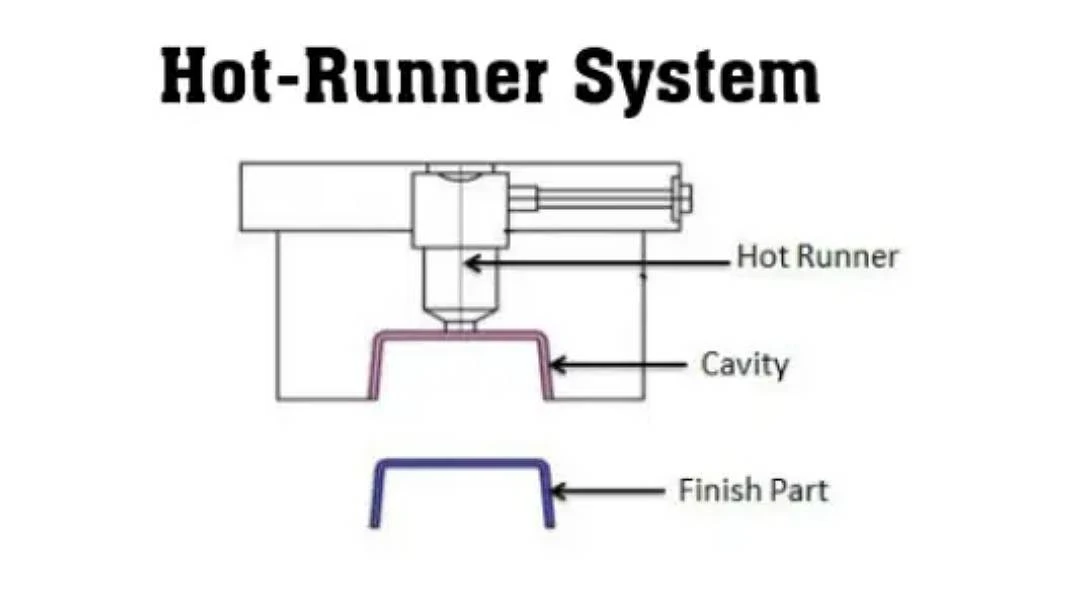
Hot runner systems have changed the field of injection molding. In these systems, molten plastic is injected into a mold cavity through heated runners, which remain in a fluid state throughout the molding cycle. This design ensures that the plastic stays molten and doesn't solidify until it reaches the cavity, making the process more efficient. A hot runner system consists of a manifold, nozzles, and heating elements that work together to deliver molten plastic directly to the mold without the need for solidified runners, a feature that differentiates it from traditional cold runner systems.
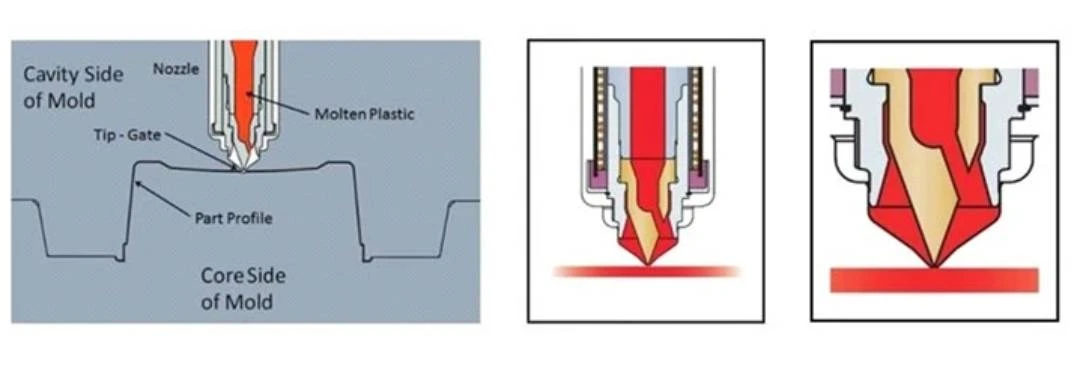
The primary advantage of hot runner systems is their ability to reduce material waste and eliminate the need for post-production trimming. Since the plastic remains molten until it reaches the cavity, there's no waste material that needs to be removed or recycled, which speeds up the entire process and reduces costs. Hot runner systems can reduce material waste by up to 50%-60% compared to cold runner systems. This makes hot runner systems a more sustainable and cost-effective choice for high-volume production.
Hot Runner vs Cold Runner Systems
In traditional cold runner systems, plastic solidifies in the runners after each cycle, requiring additional steps to remove the waste material. This adds time and cost to the production process.
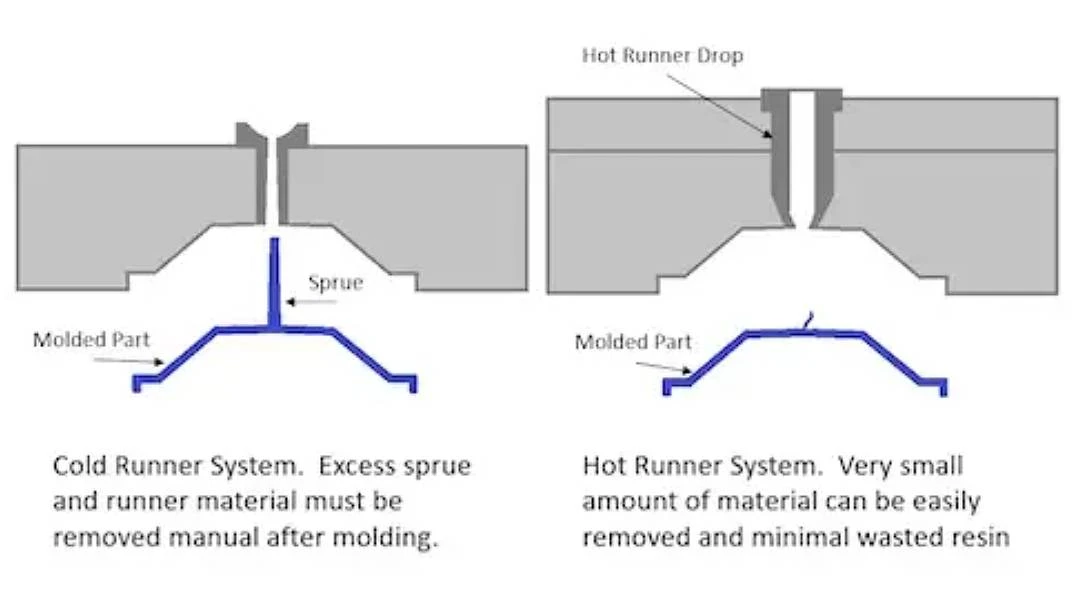
In contrast, hot runner systems continuously heat the runners, keeping the plastic in a molten state. This eliminates the need for trimming or recycling solidified plastic, which significantly reduces waste. Additionally, the direct injection of molten plastic into the mold cavities ensures faster production times and more uniform parts. Hot runner systems are ideal for high-volume production where speed, consistency, and material efficiency are key factors.
What Are the Components of the Hot Runner System
A hot runner system is made up of several components, each designed to perform a specific function:
Manifold: The central unit that distributes the molten plastic to various nozzles. It plays a crucial role in balancing the flow to ensure uniform cavity filling.
Nozzles: Deliver the plastic directly into the mold cavities. They are designed to maintain optimal flow and pressure for precise molding.
Heating Elements: These ensure that the plastic stays in a molten state while flowing through the system, preventing solidification before it reaches the mold.
Temperature Control System: Maintains the optimal temperature for the molten plastic, ensuring uniform flow and consistent quality. It works closely with the heating elements to provide accurate temperature management across the system.
The hot runner heater is at the heart of this system. It is responsible for ensuring that the temperature of the molten plastic remains stable throughout the entire process. These heaters work together with the temperature control system to create a balanced system for efficient and high-quality injection molding.
How Hot Runner Heaters Work
The heating elements in a hot runner system are typically electric heaters designed to maintain the temperature of the molten plastic. These elements are positioned in the manifold and nozzles to ensure that heat is evenly distributed across the system. The heaters work by using electrical resistance to generate heat, which is then transferred to the surrounding metal components, keeping the plastic within the desired temperature range.
This continuous heat is critical because it prevents the plastic from cooling and solidifying before it reaches the mold cavity. By keeping the plastic molten, the system ensures that it flows easily into the mold and completely fills the cavity. Without these heating elements, the molding process would face challenges such as blocked flow channels, inconsistent filling, and incomplete parts. This can lead to waste, longer cycle times, and higher production costs.
In addition to the heating elements, precise temperature control is crucial in a hot runner system. Temperature regulation is achieved through a combination of temperature sensors and control systems. These sensors, such as thermocouples, constantly monitor the temperature of the manifold and nozzles. The data from the sensors is fed into the control system, which adjusts the power supplied to the heating elements to ensure the plastic stays within the optimal temperature range.
Precise temperature regulation is important to maintain the correct viscosity for injection molding. If the plastic is too hot, it can degrade or burn, while if it's too cold, it can solidify prematurely. Premature solidification leads to incomplete mold filling and quality issues, such as inconsistent surface texture or dimensional inaccuracies. Maintaining a stable temperature ensures the plastic flows smoothly into the mold cavity, avoiding defects like warping or shrinkage.

In most systems, PID (Proportional-Integral-Derivative) control is commonly used in temperature regulation. This control method adjusts the temperature by continuously calculating the difference between the desired temperature and the current temperature, making real-time adjustments to maintain optimal heat levels. This precise method helps to reduce temperature fluctuations and ensures that the hot runner system remains within the ideal range for optimal plastic flow.Maintaining a stable temperature, typically within ±2°C, helps reduce defects and improve part consistency by 30%.
Furthermore, the collaboration between the hot runner heaters and the temperature control system ensures that heat is evenly distributed across the entire system. This prevents localized overheating or underheating, which could cause flow issues or defects in the final molded product. The temperature control system also ensures that the system can recover quickly from any sudden temperature drops, which can happen when new material is injected into the mold.By regulating the temperature with high precision, hot runner systems avoid common issues such as poor mold filling, shrinkage, or surface imperfections.
What is the Main Role of Hot Runner Heaters in System Heating
- Temperature Control and Plastic Flowability
One of the primary functions of hot runner heaters is to maintain the optimal temperature of the molten plastic as it moves through the system. Without proper temperature control, the plastic can cool too quickly and begin to solidify before reaching the mold cavity. Even a variation of as little as ±2°C from the target temperature can significantly affect the plastic's viscosity, leading to inconsistent flow. When the plastic loses its fluidity, issues such as incomplete mold filling, surface defects, and inconsistent part quality can occur. By keeping the plastic at a consistent, optimal temperature, hot runner heaters ensure that the plastic flows smoothly and uniformly into the mold, reducing problems like uneven flow or air pockets.

- Increased Production Efficiency and Reduced Waste
In addition to improving flowability, hot runner heaters also contribute to higher production efficiency. Because the molten plastic is maintained at a stable temperature, the cooling phase becomes more controlled and faster. Some industry estimates suggest that cycle times can be reduced by 20–30% compared with traditional cold runner systems. This reduction in cooling time minimizes the downtime between cycles, thus increasing overall production rates. Moreover, since the plastic remains molten throughout the process, there is no need for additional steps to trim or recycle solidified plastic, a common requirement in cold runner systems. Estimates indicate that such systems can reduce material waste by up to 60%, which lowers material costs and improves resource efficiency, making the process both more sustainable and cost-effective.
- Benefits for Improved Product Quality
Precise temperature regulation provided by hot runner heaters not only enhances production efficiency but also improves the quality of the molded parts. Consistent temperature control helps maintain the plastic's optimal viscosity, which is critical for ensuring smooth flow into the mold cavity. This uniform flow minimizes common defects such as shrinkage, warping, and surface imperfections. In addition, maintaining stable temperature conditions contributes to better dimensional accuracy and a superior surface finish-features that are particularly important for high-precision products like medical devices and automotive components. When the plastic is injected at the ideal viscosity, parts are more likely to meet tight tolerances and exhibit a consistent, high-quality finish.
Hot Runner Heater Design and System Optimization
Hot runner heaters are not a one-size-fits-all solution. Their design can be customized based on the specific needs of the mold, plastic type, and production process. Manufacturers can choose different types of heating elements, such as electric heating elements or thermocouples, depending on the application.
Heater Design and Customization
Electric heating elements are commonly used in hot runner systems because they are highly efficient and easy to integrate. These elements generate heat through electrical resistance, keeping the molten plastic at the right temperature. However, in some cases, thermocouples may be preferred, especially when precise temperature measurements are critical, such as when working with specialized materials that require exact thermal management. Customizing the heater design ensures that the system operates efficiently and is tailored to meet the specific requirements of the production process.
Choosing the Right Heater Configuration
Once the heater is customized, the next step is selecting the right configuration to optimize performance. Single-point heating works best for simple, low-volume production where a consistent temperature is needed across one flow channel. On the other hand, multi-point heating is ideal for complex molds with multiple cavities, allowing precise temperature control in each individual flow path. This ensures that molten plastic flows evenly into each cavity and fills the mold properly.
Temperature zone management is also crucial for system optimization. By dividing the hot runner system into multiple temperature zones(each with its own temperature control)manufacturers can keep the temperature stable and uniform throughout the system. This is particularly important for larger molds, where temperature variations can lead to inconsistencies in the final product.
System Optimization and Adjustment
With the right heater configuration in place, fine-tuning the system's performance is essential for achieving optimal results. This can be done by adjusting the temperature settings, heating power, and flow parameters based on real-time monitoring and feedback from the production process. For instance, adjusting the heating elements' temperature for specific plastic materials can improve flow rates, reduce cycle times, and ensure better molding consistency.
Digital controllers and automated feedback systems can continuously monitor and adjust these settings to avoid issues like overheating, underheating, or incomplete filling, preventing defects in the final product and maximizing production efficiency.
Applications of Hot Runner Heaters
Hot runner heaters are widely used across a variety of industries that require precision and high-volume production. Common applications include the manufacturing of consumer goods, such as smartphone cases and bottle caps, where producing high-quality and consistent molds is essential. Hot runner systems are also extensively used in industries like automotive and medical device production, where product accuracy and integrity are critical.

For example, in the automotive industry, hot runner systems ensure that each part, such as engine components, is produced with precise dimensional accuracy. This ability to maintain temperature control and reduce material waste makes hot runner heaters an ideal solution in these high-precision fields.
For example, in industries such as medical devices and packaging that need to ensure product appearance and functionality, the role of hot runner heaters becomes more critical. For products like medical syringes, catheters, and packaging containers, any defects in molding can result in costly recalls or unusable products. By ensuring that the plastic remains at the optimal temperature and flows consistently into the mold, hot runner heaters help safeguard the quality and functionality of these critical products. Additionally, the reduced material waste provided by hot runner systems supports more sustainable production practices in these industries.
Conclusion
Hot runner heaters are key to the effective functioning of hot runner systems. By keeping the temperature precise, these heaters help prevent premature solidification, improve material flow, and boost both production efficiency and product consistency. This not only enhances overall production but also reduces waste and ensures high-quality, reliable parts.
The Impact of Hot Runner Systems on Modern Injection Molding
Hot runner systems, especially the heating elements within them, have significantly transformed the injection molding process. They enable manufacturers to produce high-quality parts faster, with less material waste and more consistency. The impact of hot runner systems is significant, as they continue to be a vital component of industries that require high-volume, high-precision production.

Therefore, it is crucial to work with a trusted supplier that provides high-quality heating solutions to achieve optimal performance.At SUWAIE, we bring 18 years of industry expertise and are committed to delivering high-quality hot runner heaters that ensure uniform melt flow, reduce blockages, and improve product consistency. Our products are rigorously tested by over 50 engineers and 20 quality inspectors to guarantee long-term reliability. Whether you need OEM or ODM solutions, we are here to meet your unique application needs. Contact us (info@suwaie.com)today to get the best heating solution for your production process.