


What Is Quartz Heating?
Quartz heating is a type of radiant heating, commonly referred to as short-wave infrared heating.
Radiant heating uses infrared waves to directly heat the surfaces of objects. All objects emit and absorb infrared heat, which is part of the electromagnetic spectrum with a frequency below visible light. Hotter objects will radiate more of this heat. This is the basis of the technology for most quartz heaters.

The development of quartz heater
1.Early exploration (before the 1950s)
The foundation of electric heating principle: at the end of 19th century to the beginning of 20th century, the invention of resistance heating technology (such as nickel-chromium alloy electric heating wire) laid the foundation for electric heaters, but the efficiency of traditional metal heating elements is low and easy to oxidize. Preliminary applications of quartz materials: Quartz glass was used in laboratory vessels and optical equipment in the early days because of its high temperature resistance, low coefficient of expansion and good insulation, but has not yet been combined with heating technology.
2. The beginnings of technology (1950s-1960s)
Combination of quartz tube and electric heating wire: Researchers have found that by encapsulating a metal resistance wire (such as tungsten or nickel-chromium alloy) inside a quartz tube, efficient radiation heating can be achieved through the insulating and light-transmitting properties of quartz. The high-temperature resistance of quartz (melting point about 1650 C) makes it an ideal carrier. Utilization of infrared radiation characteristics: Quartz tube can emit far infrared rays after being energized. This kind of thermal radiation is more efficient than traditional convection heating, especially suitable for local heating or industrial applications
3. Commercialization and popularization (1970s-1980s)
The appearance of household quartz heaters: The energy crisis in the 1970s promoted the demand for efficient heating equipment, and quartz tube heaters entered the home market due to their characteristics of instant heating, energy saving and lightness. The typical design is an exposed quartz tube with a reflector hood to direct radiation heat. Industrial expansion: used for plastic processing (such as injection molding heating), food drying, printing drying, etc., with precise temperature control and fast response to replace some gas heating.
4. Technological optimization (1990s-2000s)
Material improvement: High purity quartz tube reduces thermal attenuation and prolongs life. The heating wire is upgraded to a more heat-resistant tungsten alloy or doping material. Structural innovation: Closed design (such as quartz tube filled with inert gas) prevents oxidation and improves safety. Pair with thermostat and fan (such as heater) to enhance energy efficiency. Scenario application: Waterproof quartz heaters for bathrooms, portable desk heaters, etc.
5. Modern developments (2010s to date)
Intelligentization and energy saving: Integrated PID temperature control, Wi-Fi remote control (such as smart home linkage). Semiconductor heating technology (such as PTC ceramics) is combined with quartz to improve energy efficiency ratio. New material fusion: Nano-coated quartz tube enhances infrared emissivity. Carbon fiber heating body replaces part of the metal wire to achieve faster heating

How do Quartz Heaters Work?
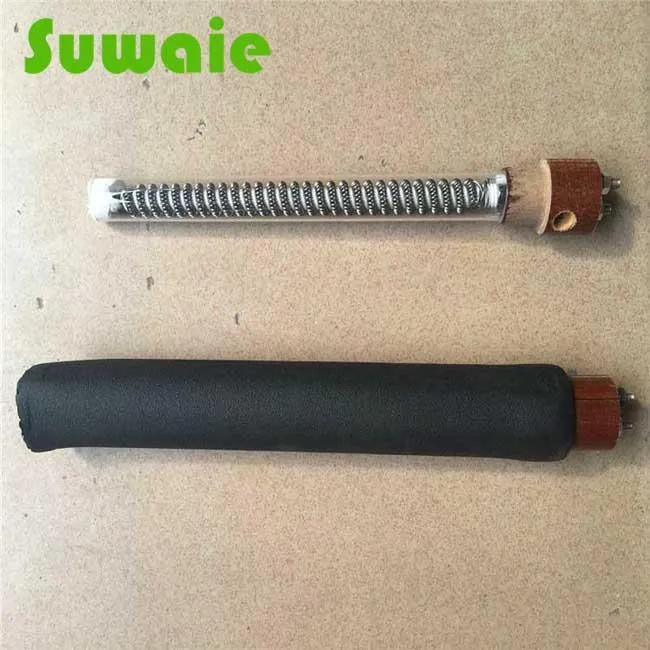
A quartz heater is a common type of infrared heater and the creation and subsequent release of heat from the heater is made by the heating element, enclosed in a quartz tube. The heating element produces heat at the necessary wavelength to create the appropriate level of intensity to heat the specific material required. The purpose of the tube is to protect the heating element and also to stop the escape of convection heat.
The principle of quartz heating works with the heating element becoming very hot and the quartz tube experiencing a sudden build up of heat. When the tube reaches the appropriate temperature, the heat is emitted out of the tube. The wavelength of heat produced from this process has been acknowledged as ideal for the human body. The infrared heat is directly absorbed by the people and objects near the heater and very little heat is absorbed by the air, due to the infrared spectrum being almost completely outside the absorption spectrum of air.
If you'd like to learn more about short, medium and long wave quartz heating, please visit our info page on Types of Heating.
Are quartz heating elements safe?
Quartz heaters are safe when used normally, but their safety is also influenced by certain factors. The working principle of a quartz heater involves heating through internal resistance wires, which then transfer the heat to the quartz tube and radiate it as infrared rays. This design allows the quartz heater to efficiently convert electrical energy into thermal energy. The advantages of quartz heaters include ease of design, manufacture, and installation, as well as being economical and safe However, quartz heaters also pose some safety hazards. Some products may have a simple design, lacking temperature control switches or protective measures, posing a fire risk. Additionally, quartz heaters generate electromagnetic radiation during operation, which, while generally harmless to adults, can have certain effects on pregnant women and infants. Therefore, when using quartz heaters, the following points should be noted:
Choose regular products: ensure that the products purchased meet the national mandatory standards, and avoid using products with simple structure and no temperature control switch.
Correct use: follow the instructions to avoid safety risks caused by excessive or improper use.
Pay attention to the environment: ensure indoor ventilation, avoid long-term direct exposure, especially pregnant women and infants should pay special attention. Through the above measures, the safety of quartz heater can be effectively improved to ensure its safety performance in the use process
What are the advantages of quartz heater compared with other heaters?
High efficiency and energy saving: Quartz heater uses the excellent light transmittance of quartz glass to efficiently convert electric energy into infrared radiation energy, realizing rapid and uniform heating effect. This conversion efficiency is high and energy saving effect is significant, usually about 30% more energy saving than general heating elements. Rapid heating: Quartz heating tubes have rapid heating and small thermal inertia, which makes them excellent for applications requiring rapid heating. Compared to traditional hot air heating methods, quartz heaters can control temperature in an extremely short time, with rapid heating and cooling, thus saving a lot of energy and time. Far infrared radiation characteristics: Quartz heaters can absorb almost all visible light and far infrared light radiated by the electric heating wire, and convert it into far infrared radiation. This far infrared radiation has high conversion efficiency and excellent radiation characteristics, which can directly heat the surface of objects rather than heating the air, thus improving the heating efficiency. High temperature resistance and long life: Quartz materials can withstand extremely high temperatures, some encapsulated quartz tubes can withstand up to 800℃. The service life of quartz heaters can reach 3000-5000 hours, or even longer, depending on the use environment Environmental protection and no pollution: quartz heater has no pollution in the process of use, which meets the requirements of high rhythm and high quality of modern production. It has strong acid resistance and corrosion resistance, and can work stably in various complex environments Design and installation are convenient: The design and installation of quartz heater are very convenient, economical and safe. Its compact structure can efficiently convert electric energy into infrared radiation energy, suitable for a variety of industrial and commercial occasions
Is quartz heater widely used?
Quartz heaters have a wide range of applications. They are used as heating components in various machines and equipment, such as plasticizers, copiers, printers, and fax machines. In addition, quartz heaters are widely applied in industrial fields, like the curing processes in the plastics and semiconductor industries. The applications of quartz heaters in the industrial field include: Plastic industry: Used for the melting and molding process of plastics, providing a stable heating environment. Semiconductor manufacturing: In the semiconductor manufacturing process, quartz heaters are used for wafer heating and curing. Chemical experiments: In chemical experiments, quartz heaters are used for high temperature reactions and experiments. Biomedical research: In biomedical research, quartz heaters are used to heat samples. Glass industry: In the process of glass manufacturing, quartz heaters are used for the melting and forming of glass. Electronic component testing: In electronic component testing, the quartz heater is used for preheating and testing of components.
Summary:
Quartz heaters are widely used in the home and industrial fields due to their high efficiency and safety features, especially suitable for scenes that require rapid directional heating. Proper use and maintenance can significantly extend their

If you are looking for best heating elements manufacturers and suppliers, please feel free to contact us for Bobbin Heater price and more detailed introduction. SUWAIE is a high-tech company engaged in electric heaters, For 17 years, Specialized in solving any needs for customers, At the same time, it is also our supplier and manufacturer of electric heater. There are different types of industrial heaters for sale If you are interested, please visit our website (www.suwaieheater.com) for consultation. There are different types of heating elements and large machinery available. We look forward to your visit